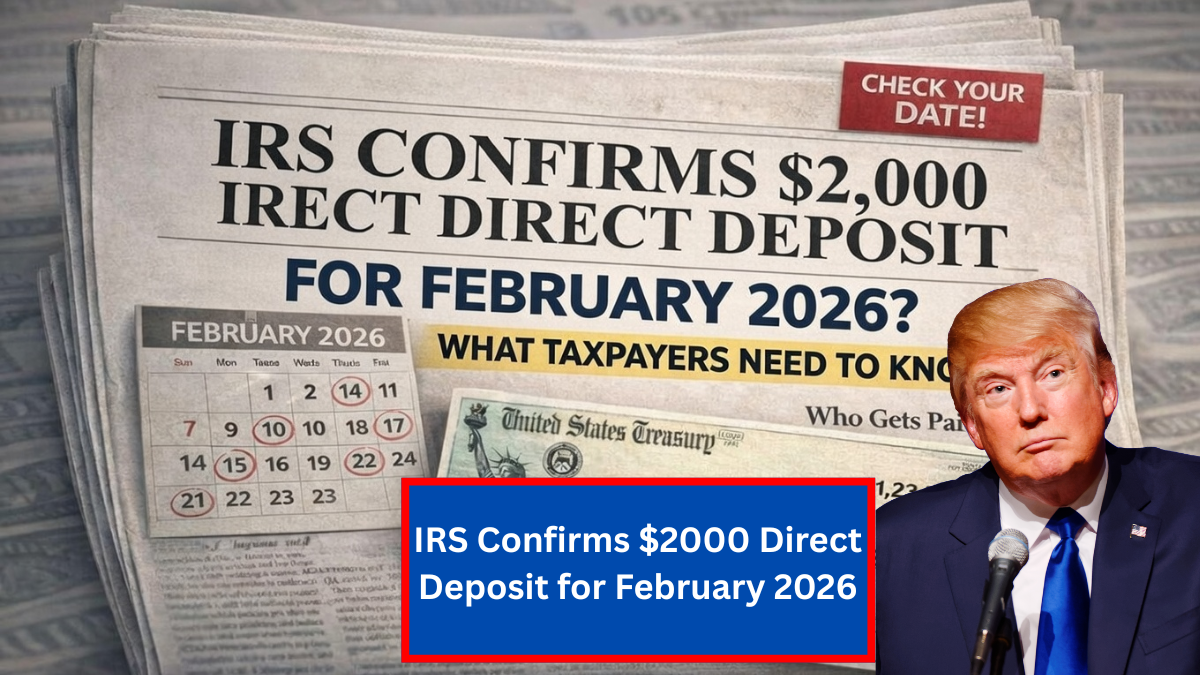
Many Americans have recently seen headlines claiming that the IRS has confirmed a $2,000 direct deposit for February 2026. These reports have created excitement and confusion at the same time. With rising living costs and ongoing financial pressure, a payment of this size would certainly help many households. However, it is important to understand what is officially confirmed and what is still speculation.
As of now, the Internal Revenue Service has not announced a nationwide $2,000 stimulus style payment for February 2026. Any direct deposit program of this scale would require approval from Congress and a signed federal law before the IRS could begin issuing payments. Taxpayers should rely only on official IRS announcements and verified government sources for accurate updates.
Is There Really a $2,000 Direct Deposit in February 2026
At this time, there is no officially approved $2,000 direct deposit scheduled for February 2026 for all Americans. Online rumors and viral posts may suggest that a payment has been confirmed, but no formal legislation has been passed to authorize such a benefit.
In the past, stimulus checks were issued during national emergencies, such as during the COVID 19 pandemic. Those payments were backed by federal law, clearly explained eligibility rules, and publicly announced payment timelines. If a similar payment were to be approved again, the IRS would release detailed guidance explaining who qualifies and when deposits would begin.
Without a new law, the IRS cannot send out automatic $2,000 payments to everyone. It is important to separate proposals or discussions from confirmed government action.
Possible Payment Dates If Approved
If Congress were to approve a $2,000 direct deposit in the future, payments would likely follow a structured distribution process. Based on past experience, the IRS typically sends payments in phases.
First, direct deposits would go to individuals who have valid bank information on file from recent tax returns. These payments usually arrive faster than paper checks. Next, paper checks may be mailed to those without direct deposit details. Finally, prepaid debit cards could be issued to certain eligible recipients.
Payment timing would depend on several factors, including how quickly legislation is passed and how fast the IRS can update its systems. Typically, direct deposits begin within a few weeks after a law is enacted, but exact timelines vary.
Who Would Be Eligible
If a $2,000 payment were officially approved, eligibility would likely depend on income limits, tax filing status, and residency requirements. In previous programs, individuals with lower or moderate incomes qualified for the full payment, while higher income earners received reduced amounts or no payment at all.
Eligibility could also depend on whether a person filed a recent federal tax return. The IRS usually relies on tax records to determine payment amounts and deposit information. Social Security beneficiaries and certain federal benefit recipients may also qualify automatically, depending on the program’s structure.
Until official rules are announced, it is not possible to confirm who would qualify or how much they would receive.
In conclusion, while many headlines claim that a $2,000 direct deposit for February 2026 has been confirmed, there is currently no official approval from the IRS or Congress. Taxpayers should remain cautious about viral claims and always check official IRS updates before expecting any payment. If a new financial relief program is approved, detailed guidance about payment dates and eligibility will be clearly communicated through official government channels.
Disclaimer: This article is for informational purposes only and does not provide tax, legal, or financial advice. As of February 2026, there is no approved nationwide $2,000 IRS stimulus payment. Refund amounts and timelines depend on individual tax situations and official IRS procedures. For accurate and personalized guidance, consult IRS.gov or a qualified tax professional.